
A knockout is the shortest true sentence in tournament padel. Win and you stay. Lose and you go home. The bracket is the whole design.
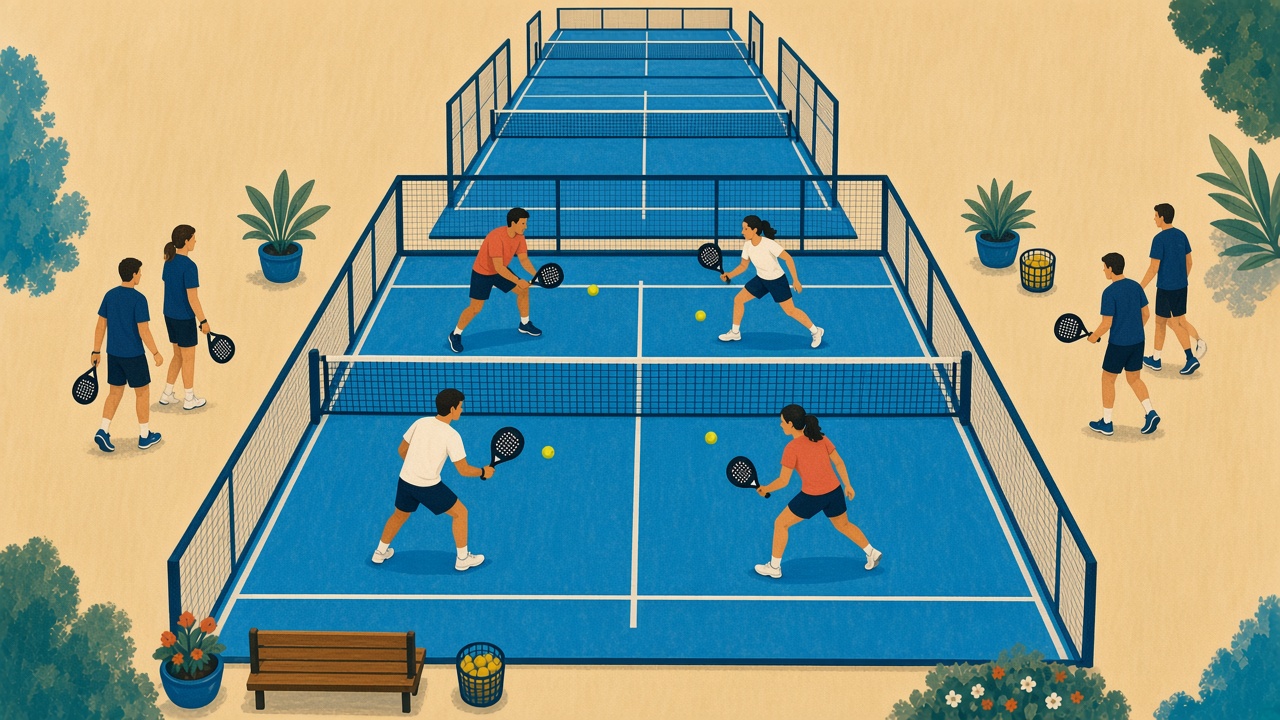
Every round, half the courts go quiet. That is not a scheduling accident. That is the format.
It is the right draw when the day has to finish and everyone knew the deal. It is a mean draw when someone’s first match is also their last, especially if they paid for an afternoon. If you need guaranteed matches first, put a group stage in front, a qualifying round for the pairs who are not already in, or a consolation plate behind the first round.
One loss, and the day is over
Fixed pairs. A bracket. Winners advance. Losers are out. Eight pairs produce seven matches: four quarter-finals, two semis, one final. No table. No “but we played well.” The scoreboard is the bracket.
Scoring is normal padel. Best of three sets, a match tie-break instead of a third set, or a pro set if the booking is short. Announce which one on the entry form. The bracket does not care which you pick. The clock does.
Eight pairs, straight knockout, is seven matches. A round robin of those same eight pairs is twenty-eight. That is why people choose this when the lights go off at seven.
A worked draw: eight pairs
The pairs go onto a tree. Stronger pairs sit on opposite sides, so the two best cannot meet before the final. That is the only kindness in the format. Use it.
Highlighted names won the match. The score sits on the winner.
Main draw · 8 pairs
Ana & Ben are the champions. Carla & Dani played one match. Both of those sentences are the format working.
Read the quarters as the actual draw, the thing you publish the night before. The semis and the final are what the results filled in. You do not redraw the semis. The winners fall into the next box. If you “just swap the semis because court 1 is free,” you have given one half an easier path and you will not be able to explain it.
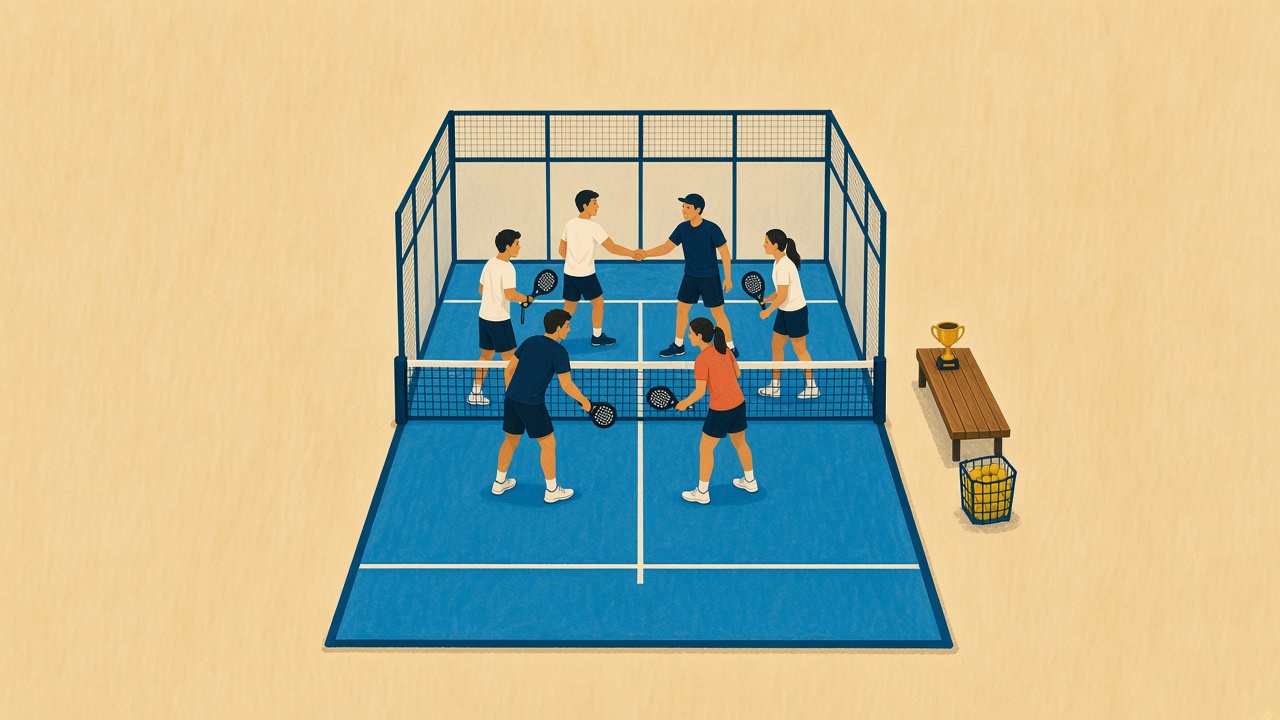
The cup is for the pair that kept winning. Everyone else has already driven home.
On two courts, the quarter-finals take two waves, the semis take one, and the final takes one court while the other court sits there looking expensive. That empty court at the end is normal. Filling it with a hit-up is fine. Filling it with a match you did not draw is how the final starts late.
When the field is not 4, 8, or 16
Six pairs do not fit a clean tree. You round the bracket up to eight and leave two gaps. Those gaps are byes: a free pass into the next round. They are not a 6–0 you invent so the sheet looks full.
The two strongest pairs take the byes, and they take them on opposite halves.
6 pairs · two byes into the semis
Ana & Ben and Carla & Dani walk into the semis without hitting a ball. Tell them. Tell the other four, too. A bye that surprises people feels like you picked a favourite in the car park. A bye that was on the sheet the night before is just arithmetic.
The same rule scales. Five, six, or seven pairs use an 8-slot bracket. Nine to fifteen use a 16-slot bracket. Count the byes before you promise a start time: a pair with a bye is free for the first wave, and a pair without one is not.
Where to put people, if you know them
-
1
Split the two best
Opposite halves. If they are both as good as the room says, they should meet in the final, after they have each won their side.
-
2
Then split the next two
One in each half, in the quarter the top pair is not in. Now the top four can only meet in the semis or the final.
-
3
Draw the rest
The remaining pairs can be random. Random among the unseeded is fair. Random including the two best, so they might meet in round one, is how a favourite goes home before the coffee arrives.
If you do not know the field, a fully random draw is honest. Say that. “We seeded it” when you sorted by whoever replied first is a different sport.
Publish the bracket before the first warm-up. A draw made on court 1, with both pairs standing there, is a negotiation.
When straight elimination is the right Saturday
Use it
- Finals day, after groups have already been played
- A club championship with a hard stop
- A small, serious field that wants a winner, not a table
- Any day where losing is allowed to end it
Skip it
- A paid social, or beginners who drove an hour
- You promised “everyone plays at least twice”
- The field is huge and a first-round loss would empty the club by noon
- You wanted a ranking. A bracket is a story, not a ranking
If the promise was two matches, do not hope the quarters run long. Add a consolation plate for the first-round losers, or start with groups. Hope is not a second match.
The other draws
Same club, different Saturday.
The bracket should not be a photo of a whiteboard
Padel Playground builds the knockout, hands out the byes, and moves winners into the next round when you enter the score. Players open a link and see the court. You stop redrawing the semis by hand.
How many matches does each pair play?
The champions play one match per round. In an 8-pair draw that is three. A first-round loser plays one. If that feels too thin for the entry fee, the format is wrong for the day, or you need a consolation beside it.
What is a bye, in plain words?
An empty slot. The pair opposite a bye goes through without playing. You use byes when the number of pairs is not 4, 8, or 16. Give them to the strongest pairs, on opposite sides of the bracket, and write them on the draw before match day.
Can we play a third-place match?
Yes, and it is usually the first thing to cut when you are late. The two semi-final losers are already out of the title. A bronze match is a gift of one more game, not part of finding a champion.