
A round robin is the format where nobody can say they were unlucky. Every pair plays every other pair. The table is the tournament.
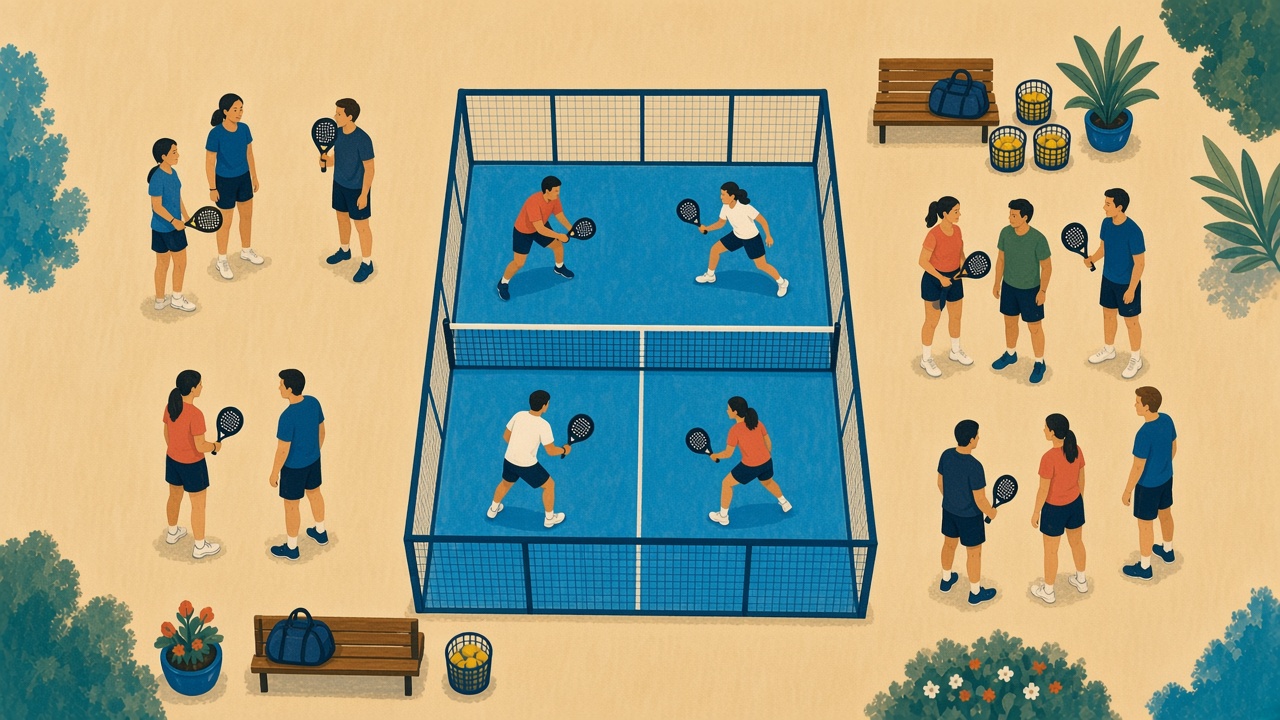
Everyone is still here at the end. That is the format. It is also why the day gets long.
People mix this up with an Americano, and with a group stage. They are three different Saturdays.
An Americano breaks the pair on purpose and scores individuals. A round robin keeps the pair. A group stage is several small round robins that feed a bracket. One group, no bracket: that is this.
One group, and that is the whole idea
Fixed pairs. One group. Each pair plays each other pair once. Standings decide first, second, and the rest. A final is optional theatre. The table already knows.
Matches = pairs × (pairs − 1) ÷ 2.
| Pairs | Matches | Rounds, if you have enough courts |
|---|---|---|
| 4 | 6 | 3 |
| 5 | 10 | 5, and someone sits each round |
| 6 | 15 | 5 |
| 8 | 28 | 7 |
| 10 | 45 | 9 |
Six pairs and two courts is a proper club morning. Eight pairs is a day. Ten pairs is how you discover the lights have a timer. Past that, split into groups and a knockout. A round robin of sixteen pairs is 120 matches. That is not a tournament. That is a lease.
Six pairs is a round robin. Sixteen pairs is a group stage you have not admitted to yet.
A worked draw: six pairs, five rounds
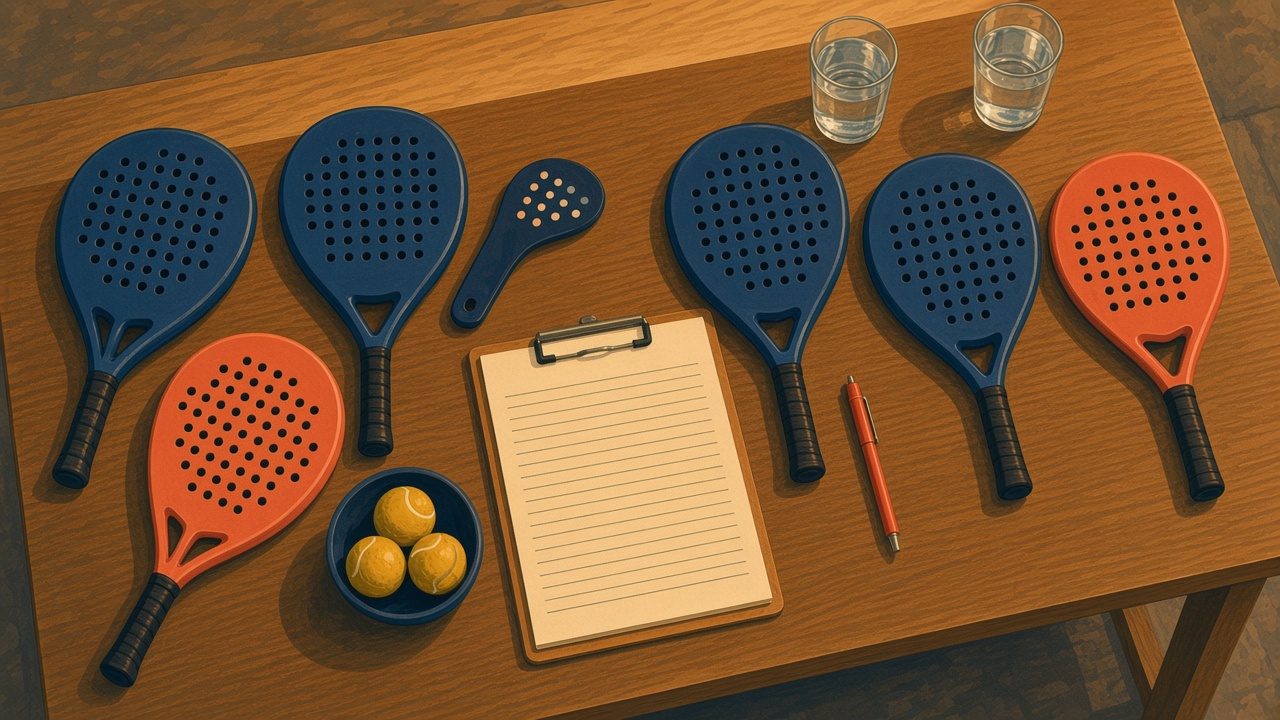
The clipboard is the draw. If it lives in one person’s head, you will replay round three.
Six fixed pairs. Each plays the other five once. Three matches make a round. With three courts they all start together and nobody sits. With two courts, one match in the round waits its turn. Do not pull a pair out of the waiting match to “keep both courts full” with the next round. The pairs overlap.
The scores below are one set to 6, so you can see the table. A serious open plays normal sets. The draw does not change. The clock does. Court maths for that is in How many courts and hours you need.
| Round | Court 1 | Court 2 | Court 3 |
|---|---|---|---|
| 1 | Ana & Ben def. Kim & Leo, 6–1 | Ines & Jules def. Carla & Dani, 6–4 | Eva & Finn def. Gia & Hugo, 6–3 |
| 2 | Ana & Ben def. Ines & Jules, 6–4 | Gia & Hugo def. Kim & Leo, 6–2 | Carla & Dani def. Eva & Finn, 6–3 |
| 3 | Ana & Ben def. Gia & Hugo, 6–2 | Ines & Jules def. Eva & Finn, 6–3 | Carla & Dani def. Kim & Leo, 6–1 |
| 4 | Ana & Ben def. Eva & Finn, 6–3 | Carla & Dani def. Gia & Hugo, 6–4 | Ines & Jules def. Kim & Leo, 6–0 |
| 5 | Ana & Ben def. Carla & Dani, 6–4 | Eva & Finn def. Kim & Leo, 6–2 | Ines & Jules def. Gia & Hugo, 6–3 |
Check it the way a player will check it in the car park. Ana & Ben’s five opponents are the other five pairs. Carla & Dani play Ines & Jules, Eva & Finn, Kim & Leo, Gia & Hugo, and Ana & Ben. Nobody plays the same pair twice. That is the draw.
Five pairs means one sit-out every round. Rotate it. Write the sit-out on the round card before you start, or the same pair will “just miss this one” twice and you will hear about it until next season.
Do not hand-build round 4 while round 2 is still on court. The pairs overlap. Finish the round, then post the next one.
What the afternoon actually produced
Matches won, then the games inside those sets. This is the result. There is no final hiding behind it unless you want a photo.
| Place | Pair | Won | Lost | Games | Diff |
|---|---|---|---|---|---|
| 1 | Ana & Ben | 5 | 0 | 30–14 | +16 |
| 2 | Ines & Jules | 4 | 1 | 28–16 | +12 |
| 3 | Carla & Dani | 3 | 2 | 26–20 | +6 |
| 4 | Eva & Finn | 2 | 3 | 21–23 | −2 |
| 5 | Gia & Hugo | 1 | 4 | 18–26 | −8 |
| 6 | Kim & Leo | 0 | 5 | 6–30 | −24 |
Ana & Ben won the group, which means they won the tournament. If you still play a final, you are adding a match the table did not ask for. Fine for a crowd. Say so before round one, because the pair that went 5–0 will not enjoy losing a one-off to the pair they already beat.
The tie, which is where friendships go
This example did not need a tie-break. The wins already sorted the table. The rule still has to be on the flyer, because the next one will tie.
-
1
Matches won
This is the table. Everything else is a splitter.
-
2
Head-to-head
If two pairs finish level, their own match decides it. In the draw above, Carla & Dani beat Eva & Finn 6–3. Had they finished on the same number of wins, Carla & Dani would sit above them, even if the game difference said otherwise.
-
3
Game difference, then games won
Use this when three pairs are level and the head-to-head is a circle: A beat B, B beat C, C beat A. Difference is the adult way out. A coin is how you start an argument you will still be having in January.
Publish the tie-break before the first serve. “We’ll decide if it happens” means you will decide it in front of the pair that loses, with both of them watching you invent a rule.
When a round robin is the right draw
Use it
- Box leagues and small club cups
- 6 to 8 pairs, and you care who was actually best
- A ranking you can defend on Monday
- Any field where a lucky quarter-final would feel cheap
Skip it
- You need a champion by dinner and the field is big
- People came for a final, not a spreadsheet
- You have two courts and twelve pairs
- It is a social and nobody has a fixed partner — that is an Americano
Scoring stays normal padel unless you announce otherwise: a set to 6, a pro set, or best of three. Shorten the set before you shorten the draw. Cutting matches is how a round robin quietly becomes a group that never finishes.
The other draws
Same club, different Saturday.
The table should not be a group chat
Padel Playground builds the round robin, puts each match on a court and a time, and keeps the standings live so the tie-break is maths instead of a vote. Players follow a link. You stop being the draw.
How is this different from a group stage?
A round robin is one group, and the table is the result. A group stage is several of those groups, and only the top pairs move into a knockout. If you have two groups, you are no longer running a round robin. You are running the first half of a club open.
How many pairs is too many?
Eight is the last number we would happily put in one group, and only with the courts to match. At ten, split. The matches multiply faster than the afternoon does.
Do we play a final?
Only if you said so at entry. The pair at the top of the table has already won a round robin. A final is an extra match for the room, and it can crown someone the table had in second.