
Americano is the format everyone thinks they already know — until they try to rotate eight friends on a napkin and someone asks, ten minutes in, “so do I keep the pair’s points or mine?”
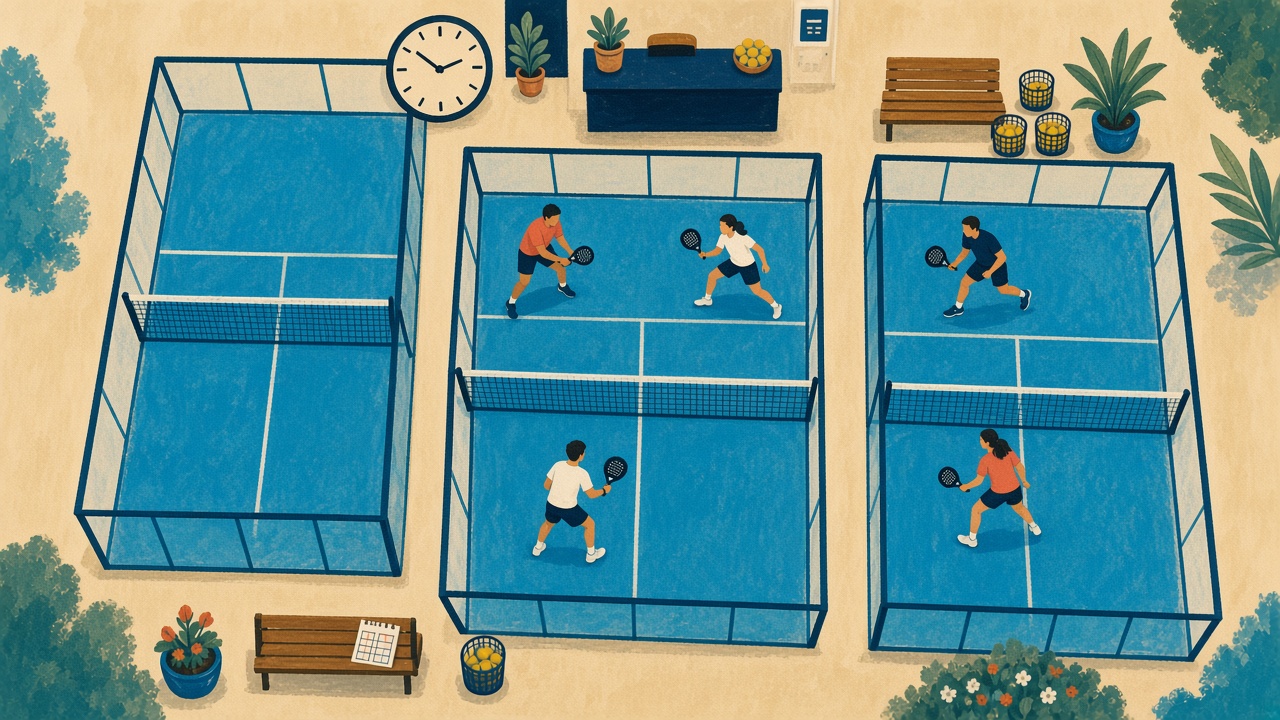
Partners change. Your points do not. That is the whole joke, and the whole point.
This is the working version. Not the romantic “just mix everyone” version. The one with sit-outs, scoring arguments, and the person who arrived as a plus-one and still wants a medal.
We already compared formats in The Most Popular Padel Tournament Formats Explained. This post is how to actually run an Americano so people ask for next Tuesday.
What an Americano actually is
You compete as an individual. You always play doubles. After every round, you get a new partner and new opponents.
That is it. People complicate it because they want it to feel like a ranking. It is not a ranking. It is a mixer with a scoreboard.
If the pair stayed the same, it would be a round robin. If only the winners stayed, it would be Mexicano. Do not mix the names. Players will, and then they will argue with you.
A round robin keeps the pair and builds a table. An Americano breaks the pair on purpose so the shy intermediate meets someone who is not their brother-in-law. We wrote the round robin version separately. Different sport, same building.
The rules people actually need
Write these on one screen. Not a PDF.
-
1
Play to a fixed score, or a clock
16, 24 or 32 rally points. Or 12–15 minutes and stop. Every ball is a point. No games, no sets, no “shall we play a breaker.”
-
2
Serve in short blocks
Each pair serves 2 or 4 points, then the serve goes over the net. Keep it even. If you invent a third serve rule at 21–19, you are the problem.
-
3
The score walks with the people
Match ends 20–12. Both winners write 20. Both losers write 12. Then everyone splits. The pair was a rental.
-
4
Highest total wins
Add the night. First to 100 is a common cutoff if you do not want a complete rotation. Or you stop when the court booking ends. Announce which, before round one.
16 if you have a lot of people and not a lot of night. 24 is the club default — about ten to fifteen minutes, enough to feel like padel. 32 if the group is small and they came to hit. Timed rounds if you have a receptionist staring at the next booking.
A scoring example that ends the argument
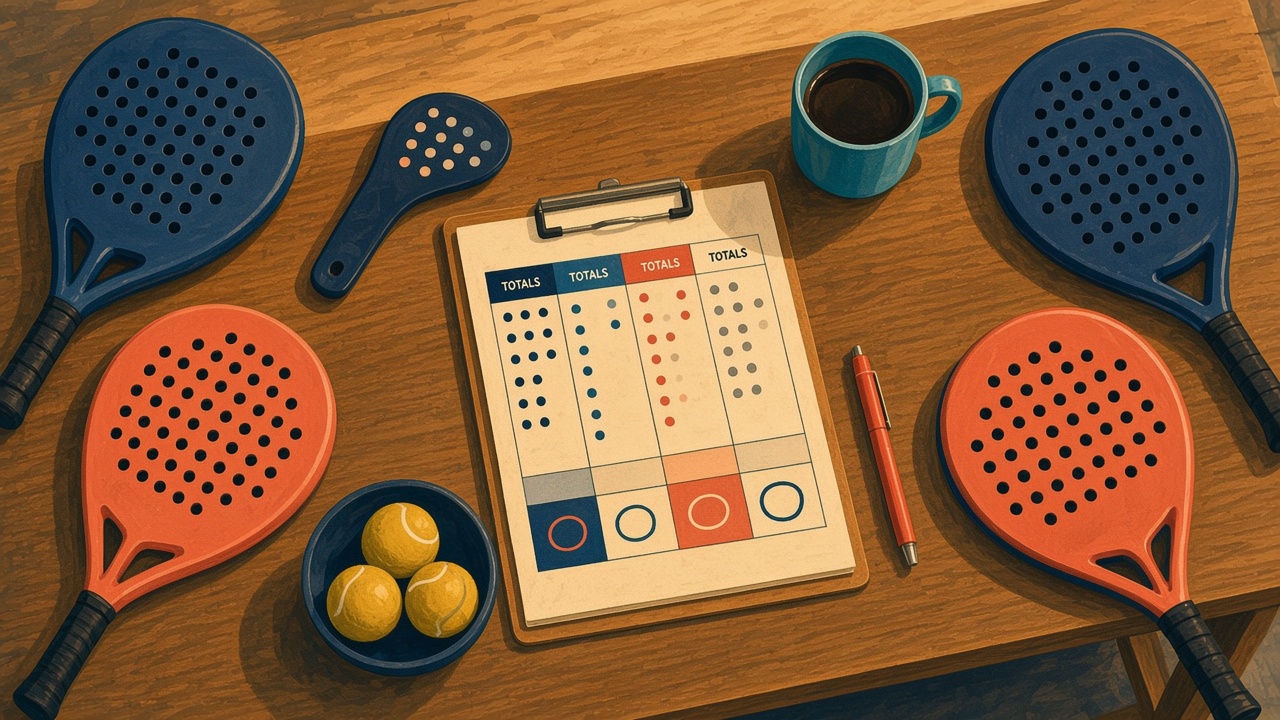
If the card lives in one person’s head, it is not a scorecard. It is folklore.
Four players. Round one ends 18–14.
| Player | Partner that round | Points |
|---|---|---|
| Ana | Ben | 18 |
| Ben | Ana | 18 |
| Carla | Dani | 14 |
| Dani | Carla | 14 |
Round two, Ana plays with Carla and wins 16–8. Ana is on 34. Carla is on 30. Ben and Dani pick up 8 each.
That is the whole mechanic. People get stuck because they want to “share” the win as 1–0. Do not. Americano without rally points is just musical chairs.
Enter the score before anyone leaves the court. “We’ll add it at the end” is how you invent a 4-point dispute between two people who both have very confident memories.
Players, courts, and the sit-out problem
Americano wants a number you can divide by four. 8, 12, 16. Those nights are clean: every round, every court is full, nobody is practising smash form against the glass.
| Players | Courts so nobody sits | Realistic night (24 pts) |
|---|---|---|
| 4 | 1 | 45–60 min, 3 rounds |
| 8 | 2 | 90–120 min |
| 12 | 3 | 2–2.5 hours |
| 16 | 4, or two groups of 8 | 2–2.5 hours per group |
If you only have two courts and sixteen names, do not run one giant Americano. Run two groups of eight. A 16-player rotation on two courts is a queue with rackets.
Someone sits. Rotate the sit-out so it is not always the last person who paid. Tell them before they arrive. A surprise bench is how you lose a regular.
The lazy club rule: one court per 8–10 players if you accept a sit-out. The honest rule: one court per four players if you want everyone hitting. We go deeper on the clock in How many courts and hours you need.
Levels: mix them if the gap is “club Tuesday.” Split the field if one pair would otherwise collect 32s and someone else would collect apologies. Americano is friendly. It is not a charity.
Mixed nights: pair one man with one woman every round if that is the promise. Say so on the flyer. Do not discover the rule during round three.
How to run the night without becoming the draw
The format is easy. The admin is what makes people swear off hosting.
-
1
Cap the list and take the fee
A number that fits your courts. Money first. Unpaid names are not a field. They are a weather forecast. The longer version is in How to take padel tournament registrations.
-
2
Do not write the rotation by hand
Eight players is already a crossword. Twelve is a personality. Software should spit the next partner. If you are circling names on a beer mat, you will double-book court 2.
-
3
Publish the next court
People should not have to find you between rounds. A link, a TV, a printed round one as backup when someone’s phone dies. Someone’s phone will die.
-
4
Keep the table live
Americano without a running total is just exercise. The fun is glancing at the phone and seeing you are four points off second.
Briefing: four minutes. Scoring, where it goes, who sits if a pair is late. Then start. Waiting for the late four punishes the people who were in the car park at 18:55.
Timed 12–15 min
Reception will get the court back. Slightly less “pure.” Much more “we still have jobs.”
First to 24
Feels like a match. Fits a weeknight. This is what we run unless someone has a reason.
First to 32
Eight friends, two courts, they came to play. Let them.
First to 100, or the clock
Complete rotations are lovely and often too long. Announce the stop rule up front.
When Americano is the wrong toy
Use it
- Club socials and in-house nights
- Mixed levels who still want to talk after
- A midweek that needs a reason to exist
- New members who do not have a fixed partner
Skip it
- You promised a ranking, or a “real” champion
- Serious pairs who paid for a proper draw
- The count is 11 and you have one court
- You wanted Mexicano (winners stay, games get tighter)
Mexicano, in one paragraph because someone will ask: same short scoring, but the next round is seeded by the live table. Stronger players meet. It is a better competitive social and a worse mixer. We generate Americano, knockout, groups, and round robin. If your night is Mexicano-shaped, say so on the poster and pick a tool that actually does it. Do not run Mexicano in a spreadsheet and call it “basically Americano.”
If the Saturday needs a trophy and a finish time, use group stage plus knockout. Americano is how you fill a Tuesday.
We got tired of drawing Americanos on napkins
Padel Playground builds the rotation, keeps the individual table live, and gives everyone a link so they can see the next court without shouting your name. Players pay on the way in, or you mark them paid at reception. Same desk as a proper club open, if the group grows up.
How many players do I need?
Four is a tiny Americano on one court. Eight is the first night that feels like an event. Twelve is the sweet spot if you have three courts. Past sixteen, split the field.
Do I need software?
Four friends: a notebook. Eight, if you enjoy puzzles: still a notebook. Past two courts, or any night with sit-outs and payments, a generator stops being fancy and starts being how you keep friends.
What if someone is much stronger?
Split into two Americanos by level, or accept that they will win and everyone else will still have met three new partners. Do not “balance” by secretly stacking one pair. People notice. They just tell you later, in the car.